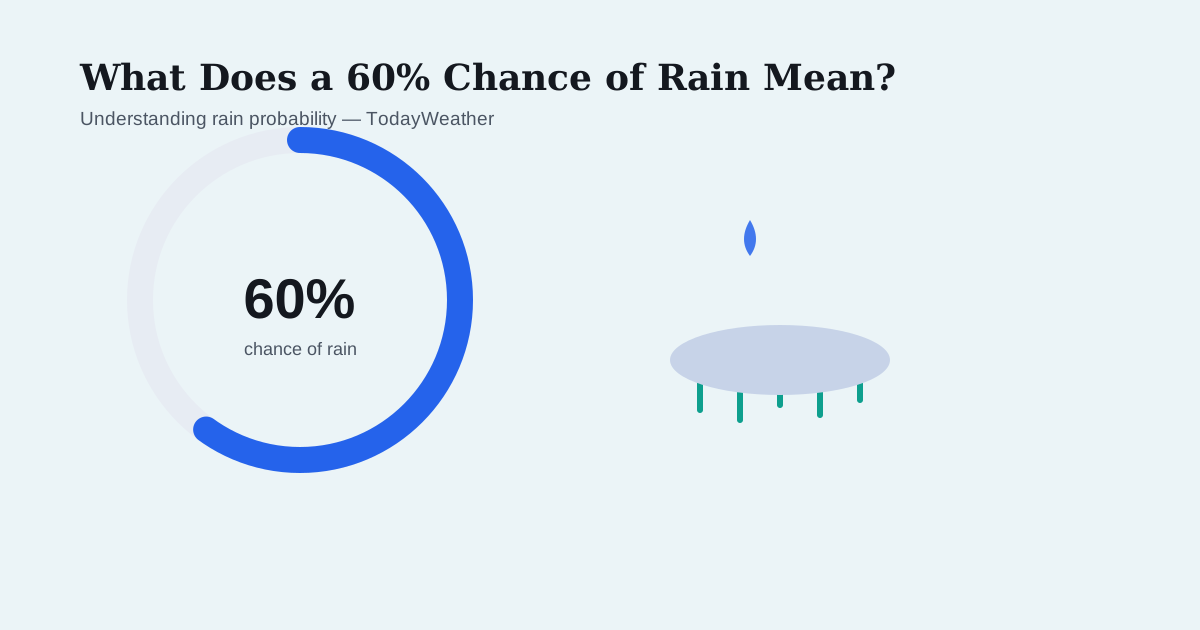
Have you ever checked the weather forecast and seen "60% chance of rain"? Many people assume it means it will rain for 60% of the day or that 60% of the city will definitely receive rain. In reality, neither interpretation is completely correct.
Rain probability, also known as the Probability of Precipitation (PoP), is one of the most misunderstood parts of a weather forecast. It helps estimate the likelihood of measurable rainfall occurring at a particular location during a specific time period.
Understanding rain probability allows you to plan outdoor activities, travel, work, and events more confidently without misunderstanding what the forecast is actually saying.
In this guide, we'll explain what a chance of rain means, how meteorologists calculate it, and how you should interpret rainfall forecasts.
What Is Rain Probability?
Rain probability represents the likelihood that measurable precipitation will occur at a specific location during the forecast period.
For example, if today's forecast shows a 60% chance of rain, it means there is a 60% probability that your location will receive measurable rainfall during the stated forecast period.
It does not necessarily indicate:
- That it will rain for 60% of the day.
- That rain will cover 60% of the city.
- That exactly 60% of people will experience rain.
Instead, it simply reflects the confidence of rainfall occurring at your location.
How Meteorologists Calculate Rain Probability
Weather experts use observations from weather stations, satellites, radar systems, weather balloons, and advanced computer models to estimate rainfall. Several factors are considered, including:
- Moisture in the atmosphere
- Cloud development
- Wind direction
- Air pressure
- Temperature
- Storm movement
- Historical weather patterns
Modern forecasting models analyse millions of weather observations before estimating the probability of rainfall.
Because weather conditions continuously change, rain probability forecasts are updated several times each day.
Understanding Common Rain Percentages
Different rain percentages indicate different levels of confidence.
10–20% Chance of Rain
A very low chance of rainfall. Most locations are likely to remain dry, although brief isolated showers are still possible.
30–40% Chance of Rain
There is a moderate possibility of rain. Carrying an umbrella may be a good idea if you plan to spend time outdoors.
50–60% Chance of Rain
Rain becomes more likely than not. While rainfall is not guaranteed, conditions are favourable enough that outdoor plans should include preparation for possible showers.
70–80% Chance of Rain
A high probability of rainfall. Many locations are expected to experience rain during the forecast period.
90–100% Chance of Rain
Meteorologists are highly confident that measurable rainfall will occur. Although exact timing and intensity may still vary, rain is very likely.
Common Misunderstandings About Rain Forecasts
Rain probability is often misunderstood. Here are some common myths:
Myth 1: 60% Chance Means It Will Rain for 60% of the Day
Incorrect. Rain probability does not describe the duration of rainfall.
Myth 2: 60% of the City Will Receive Rain
Not necessarily. Rain may affect a smaller or larger area depending on storm movement.
Myth 3: Rain Is Guaranteed Above 50%
Even a high probability does not guarantee rainfall at every individual location. Weather remains a naturally changing system.
Understanding these misconceptions helps people interpret forecasts more accurately.
How to Use Rain Forecasts for Planning
Rain probability is most useful when combined with other weather information. Before planning outdoor activities, consider:
- Rain percentage
- Hourly forecast
- Weather radar
- Wind speed
- Thunderstorm alerts
- Temperature
- Humidity
For example, a 40% chance of light showers may not disrupt your plans, while an 80% chance of thunderstorms suggests postponing outdoor events.
Checking the latest forecast shortly before leaving home provides the most reliable information.
Why Rain Probability Changes
Weather forecasts are updated regularly because atmospheric conditions change continuously. Rain probability may increase or decrease as:
- Storms develop
- Wind patterns shift
- New satellite observations become available
- Radar detects approaching rainfall
- Forecast models receive updated data
These updates improve forecast accuracy rather than indicating that earlier forecasts were incorrect.
Why Rain Probability Matters
Understanding rain probability helps people make smarter daily decisions. It is especially useful for:
- Travel planning
- Farming
- Outdoor events
- Sports activities
- Construction work
- Weddings
- School activities
- Emergency preparedness
Businesses, airports, event organisers, and local authorities also rely on rainfall probability forecasts to reduce risks and improve planning.
Conclusion
Rain probability is an important part of modern weather forecasting. It represents the likelihood of measurable rainfall occurring at your location during a specific period — not the duration of rain or the percentage of an area that will receive precipitation.
By understanding what different rainfall percentages mean and combining them with hourly forecasts, radar images, and weather alerts, you can make better-informed decisions and prepare for changing weather conditions more effectively.
The next time you see a 60% chance of rain, you'll know exactly what it means and how to use that information wisely.