Weather forecasts have become an essential part of everyday life. Before leaving home, planning a vacation, organizing an outdoor event, or even deciding whether to carry an umbrella, millions of people check the weather forecast. But one common question remains: how accurate are weather forecasts?
The simple answer is that modern weather forecasts are highly accurate for short-term predictions, but no forecast can guarantee 100% accuracy. Weather is influenced by countless atmospheric factors that constantly change, making it impossible to predict future conditions perfectly. Thanks to satellites, radar systems, weather stations, and powerful computer models, forecast accuracy has improved significantly over the past few decades.
Understanding how forecast accuracy works helps you make better decisions and use weather information more effectively.
What Determines Forecast Accuracy?
Forecast accuracy depends on several scientific and environmental factors. Meteorologists collect millions of weather observations every day and process them using advanced forecasting models. The quality of these observations and the complexity of atmospheric conditions directly influence the final forecast.
Some important factors include:
- Real-time weather observations
- Satellite and radar data
- Computer forecasting models
- Wind patterns
- Air pressure systems
- Humidity levels
- Local geography
- Ocean and sea surface temperatures
Because the atmosphere is constantly changing, forecasts are updated multiple times each day as new information becomes available.
Short-Term Forecasts Are Usually More Reliable
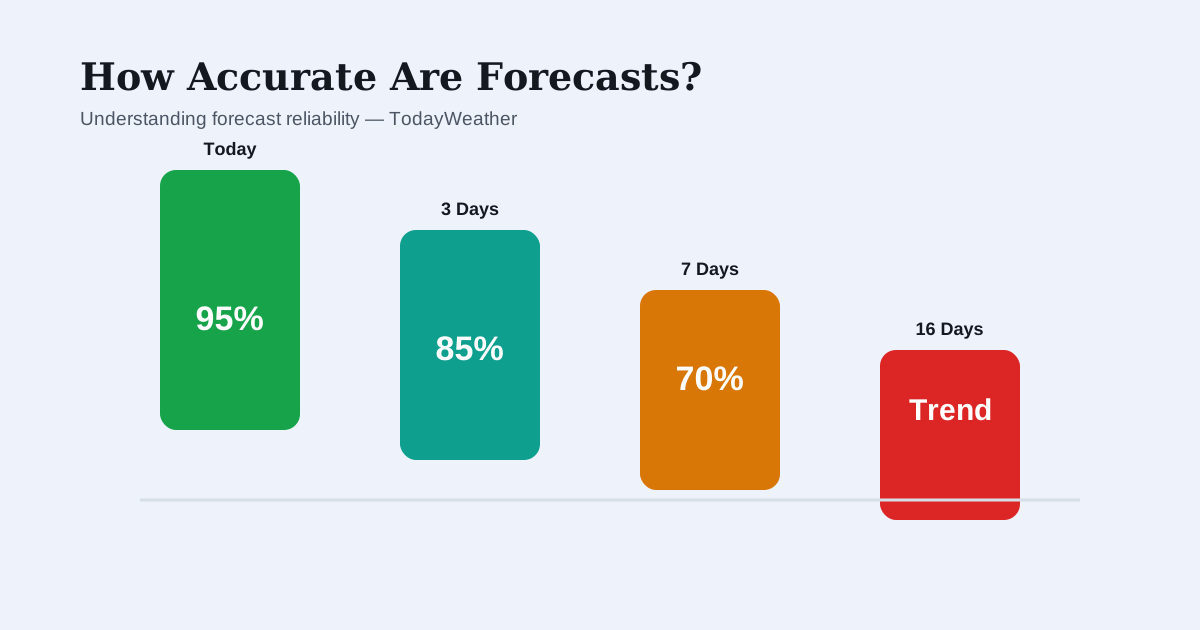
Generally, weather forecasts become less certain as the forecast period increases.
24-Hour Forecast
A forecast for the next 24 hours is usually the most reliable because meteorologists have access to current atmospheric conditions and continuously updated weather models. Temperature, rainfall, wind, and cloud cover predictions are often highly dependable during this period.
3-Day Forecast
Three-day forecasts remain quite reliable for most locations. While small changes in temperature or rainfall timing may occur, they still provide useful guidance for travel, outdoor events, and daily planning.
7-Day Forecast
A seven-day forecast offers a good overview of expected weather patterns, but individual details may change. As the atmosphere evolves, rain timing, cloud cover, or wind conditions may be adjusted in later updates.
Long-Term Forecasts
Forecasts beyond seven to ten days become less precise. Instead of predicting exact weather for a specific day, long-range forecasts usually indicate general trends, such as warmer-than-average temperatures or increased chances of rainfall.
Why Forecasts Sometimes Change
Many people notice that the weather forecast looks different from one day to the next. This does not necessarily mean the previous forecast was wrong. Instead, it reflects the constantly changing nature of the atmosphere.
Weather models receive new observations several times a day. As fresh information is processed, forecasts are refined to provide the most accurate prediction possible.
Forecasts may also change because of:
- Rapid storm development
- Unexpected wind shifts
- Changing humidity levels
- Local thunderstorms
- Mountain or coastal influences
- Seasonal weather transitions
These updates help improve accuracy rather than reduce it.
Local Geography Plays an Important Role
Weather can vary significantly even within the same city. Coastal areas, mountains, forests, rivers, and urban environments all influence local weather conditions.
For example:
- Mountain regions often receive more rainfall than nearby plains.
- Coastal cities generally experience milder temperatures.
- Large cities may remain warmer than surrounding rural areas because of the urban heat island effect.
These local differences make forecasting more challenging, especially for highly localized rainfall or thunderstorms.
How Meteorologists Improve Accuracy
Modern forecasting combines observations from multiple sources to produce better predictions. Meteorologists use:
- Ground weather stations
- Weather satellites
- Doppler radar systems
- Weather balloons
- Ocean observations
- Aircraft reports
- Advanced numerical weather models
Artificial intelligence and machine learning are also helping meteorologists identify weather patterns more efficiently and improve forecast performance.
How You Can Use Weather Forecasts Wisely
Although forecasts are very reliable, they should be viewed as guidance rather than absolute certainty. Here are a few practical tips:
- Check forecasts from trusted weather sources.
- Review updates regularly, especially before outdoor events.
- Monitor severe weather alerts during storms.
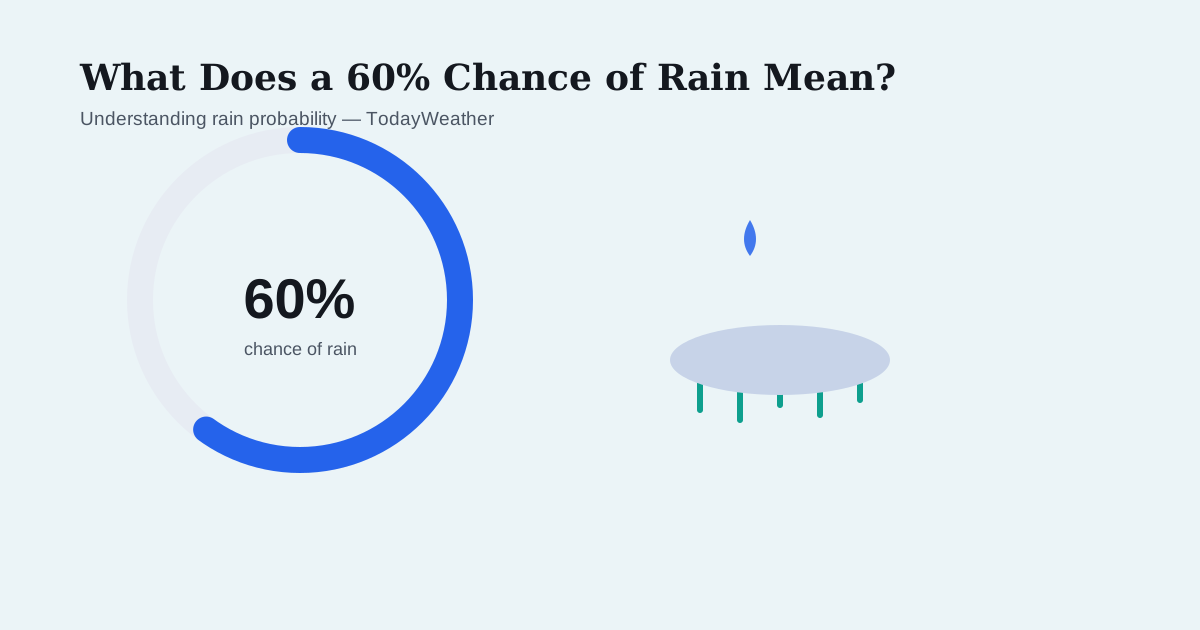
- Pay attention to rainfall probability rather than assuming it will definitely rain.
- Consider wind speed, humidity, and air quality in addition to temperature.
Using multiple weather indicators helps you make more informed decisions.
Conclusion
Modern weather forecasting is more accurate today than ever before. Thanks to advanced technology, short-term forecasts provide reliable information that helps people plan their daily lives, travel safely, and prepare for changing weather conditions.
However, weather remains a complex natural system that is constantly evolving. Forecasts improve as new observations become available, which is why updates are a normal part of the forecasting process.
By understanding how weather forecasts work and what influences their accuracy, you can use them more effectively and make better decisions for work, travel, and outdoor activities.