For most of India, the rainy season ends by October. The southwest monsoon withdraws, skies clear and winter slowly sets in. But on India's south-eastern coast the story is the opposite. In Tamil Nadu, Puducherry and coastal Andhra Pradesh, October to December is the most important rainy season of the year. This season is called the northeast monsoon.
In November 2026, for example, even as Cyclone Akvan was weakening over Odisha, the India Meteorological Department (IMD) was already forecasting isolated heavy rain over Tamil Nadu, Puducherry and Karaikal on 23–25 November. This guide explains what the northeast monsoon is, why it happens and why it matters so much to millions of people.
What Is the Northeast Monsoon?
A monsoon is a seasonal reversal of winds. During summer (June to September), the winds over India blow from the south-west, bringing moisture from the Arabian Sea and the Bay of Bengal. This is the southwest monsoon, India's main rainy season. You can read more about it in our complete guide to the monsoon.
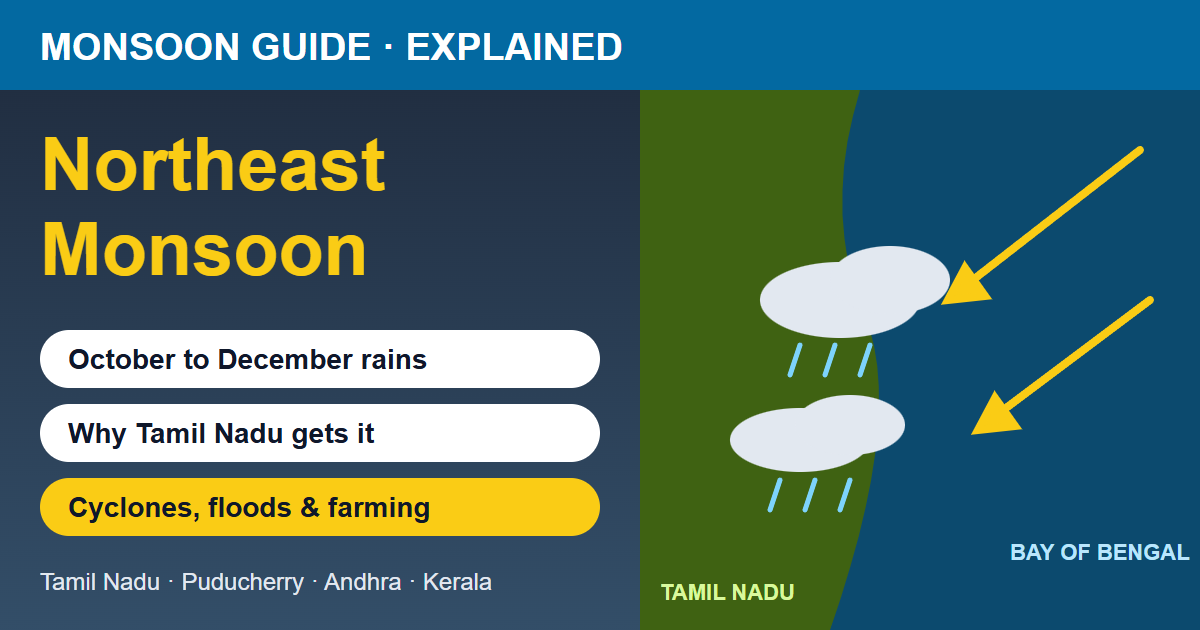
By October, the land cools down and the pressure pattern reverses. The winds over the Bay of Bengal now blow from the north-east. As they cross the warm sea, they pick up moisture and carry it onto the south-eastern coast of India. This October–December rainy season is the northeast monsoon, also called the winter monsoon or retreating monsoon rains.
Which Areas Get Northeast Monsoon Rain?
IMD tracks the northeast monsoon over five meteorological subdivisions:
- Tamil Nadu, Puducherry and Karaikal – the most important region for this season
- Coastal Andhra Pradesh and Yanam
- Rayalaseema
- South Interior Karnataka
- Kerala and Mahe
Cities and towns such as Chennai, Cuddalore, Nagapattinam, Madurai, Nellore and Thiruvananthapuram all watch this season closely.
Why Does Tamil Nadu Depend on the Northeast Monsoon?
The answer lies in geography. During the southwest monsoon, moist winds hit the Western Ghats first. The mountains force the air to rise and drop most of its rain on the windward side, over Kerala, coastal Karnataka and the Konkan. By the time the air crosses the Ghats and descends towards Tamil Nadu, it has lost much of its moisture. Most of Tamil Nadu therefore lies in a rain shadow in summer.
In the northeast monsoon, the direction flips. The winds come from the Bay of Bengal and blow directly onto the Tamil Nadu coast, with no mountains in the way. That is why roughly half of Tamil Nadu's annual rainfall, and an even larger share along its coast, falls between October and December. For coastal districts like Chennai and Cuddalore, these three months are often the wettest of the year.
When Does the Northeast Monsoon Start and End?
- Onset: IMD declares the onset once the southwest monsoon has withdrawn from south India and the winds over the south-west Bay of Bengal turn north-easterly, with fairly widespread rain over coastal Tamil Nadu. This usually happens around the third week of October, though it can come earlier or later by a couple of weeks.
- Peak: November is usually the wettest month.
- End: the season officially closes on 31 December, but rain often becomes patchy after mid-December.
The handover from one monsoon to the other is explained in our article on monsoon withdrawal and what happens next.
What Drives the Heavy Rain Spells?
The northeast monsoon does not bring steady rain every day. Instead, it comes in spells of a few days, separated by dry breaks. The biggest spells are usually caused by weather systems that form over the Bay of Bengal:
- Low pressure areas and depressions: October to December is the peak cyclone season in the Bay of Bengal, because the sea is still warm. Systems that move west towards the Tamil Nadu or Andhra coast can dump very heavy rain. Learn how they work in our guide on what a low pressure area is.
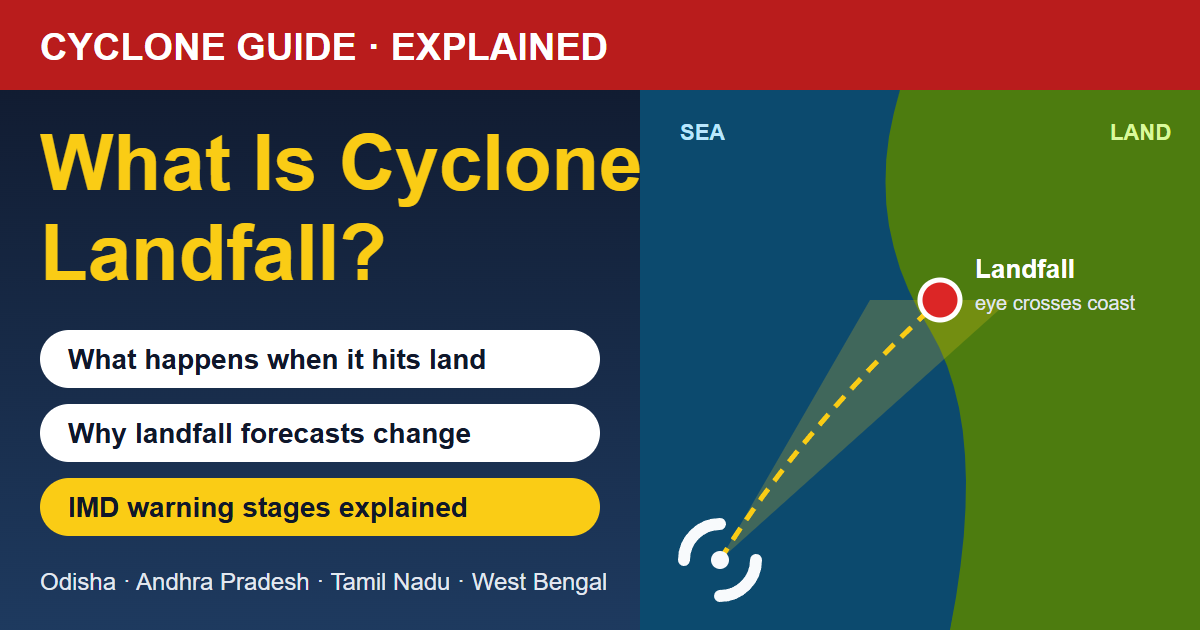
- Cyclones: a cyclone crossing the Tamil Nadu or south Andhra coast can bring extremely heavy rain within a day or two. See how cyclones form.
- Easterly waves and upper-air circulations: weaker disturbances in the easterly winds can also set off widespread rain and thunderstorms.
- Coastal convergence: when the moist north-easterly winds meet the land, they slow down and pile up, which forces air to rise and form rain clouds near the coast.
Because so much of the season's rain comes from a few strong systems, one or two heavy spells can decide whether the whole season ends up above or below normal.
How Do El Niño and Other Factors Affect It?
Scientists have found that the northeast monsoon tends to be stronger in El Niño years and in years when the Indian Ocean Dipole is positive, and weaker in some La Niña years. This is roughly the opposite of the southwest monsoon, which often suffers in El Niño years. These links are only tendencies, not rules, and each season is different. Read more in our explainer on El Niño and La Niña.
Floods in Chennai: The Risk Side of the Season
Chennai is a flat, low-lying coastal city. When a slow-moving depression or cyclone parks itself near the coast, the city can get more than 20–30 cm of rain in a day or two. Lakes and drains overflow, and low-lying neighbourhoods flood. The floods of December 2015 and the heavy rain from Cyclone Michaung in December 2023 are reminders of how quickly the city can be overwhelmed.
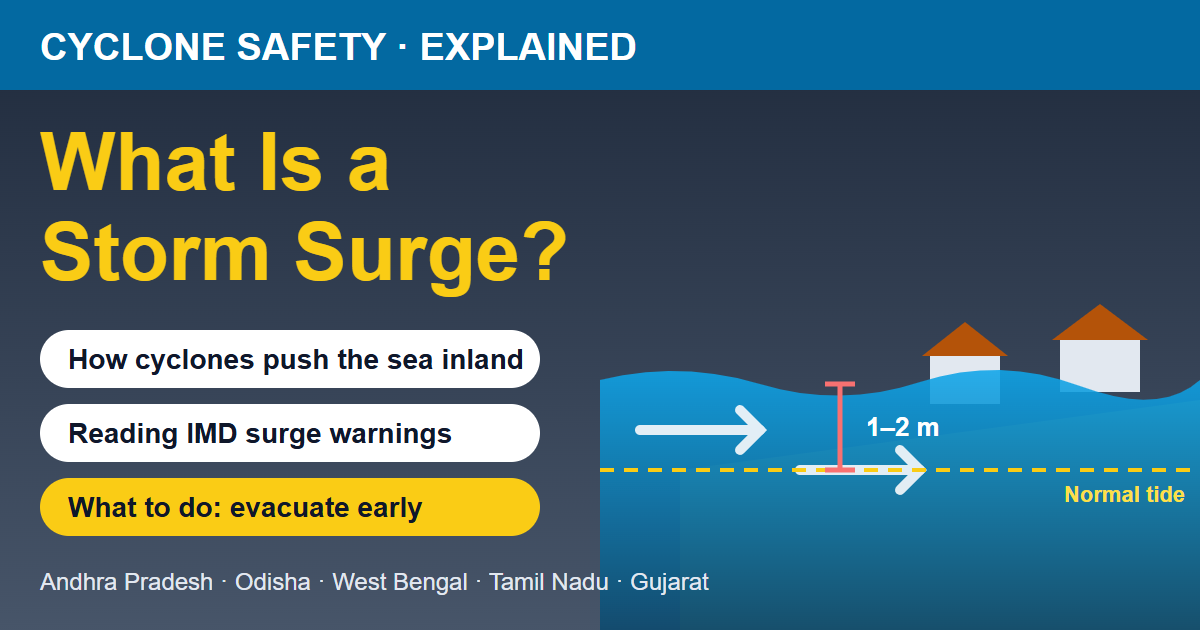
Rising sea levels at high tide can also slow down the drainage of rivers and canals into the sea, which makes flooding worse. For more on sudden flooding, read what causes flash floods.
Why the Northeast Monsoon Matters for Farmers
- Water security: the season fills Tamil Nadu's thousands of tanks and reservoirs and recharges groundwater for the dry months.
- Samba paddy: the main paddy crop in the Cauvery delta, around Thanjavur, Thiruvarur and Nagapattinam, depends on this rain.
- Other crops: pulses, millets, cotton, sugarcane, bananas and vegetables also benefit.
- The risk: very heavy rain within a short time can flood fields, flatten crops and damage harvested produce. Farmers should keep drainage channels clear and follow district agro-met advisories.
How to Stay Prepared During the Northeast Monsoon
- Check the IMD colour-coded warnings for your district every day. Our guide on IMD alert colours explains what yellow, orange and red mean.
- Avoid driving or walking through flooded roads. Even shallow fast-moving water can sweep away a two-wheeler.
- Keep phones charged, store drinking water and keep important documents in a waterproof bag.
- If you live in a low-lying area, know your nearest relief centre and move early when officials ask.
- Read our checklist on preparing your home before heavy rain.
Final Word
The northeast monsoon is a small season in area but a huge one in importance. For Tamil Nadu and Puducherry it is the main source of water for the whole year, and for Chennai it is also the season of flood risk. Understanding how it works, and why a single depression can change the whole season, helps you read IMD's forecasts better. Follow the latest weather news and check the hourly and 7-day forecast for your town on TodayWeather during October, November and December.