Weather forecasts have become an essential part of everyday life. Whether you're planning a road trip, scheduling an outdoor event, commuting to work, or simply deciding what to wear, checking the weather helps you make informed decisions.
Today, people usually rely on two main sources for weather information — weather apps and weather websites. While both provide forecasts, radar maps, and weather alerts, they differ in terms of features, accessibility, and user experience.
So, which one is more reliable? Let's compare them in detail.
What Is a Weather App?
A weather app is a mobile application that provides weather forecasts directly on your smartphone or tablet. Most weather apps offer current temperature, hourly forecast, daily forecast, rain alerts, Air Quality Index (AQI), weather radar, push notifications, and location-based weather. Apps are designed for quick access and instant updates while you're on the move.
What Is a Weather Website?
A weather website is an online platform accessible through any web browser. Besides basic forecasts, weather websites often include much more detailed information such as extended weather forecasts, interactive weather maps, historical weather data, weather news, climate information, satellite imagery, weather blogs, and educational resources. Websites generally provide a richer browsing experience than mobile apps.
Forecast Accuracy
One of the biggest questions people ask is whether weather apps are more accurate than weather websites. In reality, forecast accuracy depends more on the weather data source than on whether you're using an app or a website.
Many services use information from government meteorological agencies, weather satellites, Doppler radar, numerical weather prediction models, and ground weather stations. If two platforms use similar weather models, their forecasts may be nearly identical.
Ease of Use
Weather Apps
Advantages: Fast access, one-tap weather updates, push notifications, GPS-based forecasts, offline caching (in some apps).
Disadvantages: Limited detailed information, smaller screen size, advertisements in free versions.
Weather Websites
Advantages: Large interactive maps, detailed weather analysis, better comparison tools, easy navigation across multiple cities, rich educational content.
Disadvantages: Requires a web browser, slightly slower to access than apps.
Which One Is Better for Travelers?
Travelers often benefit from using both. Weather apps are useful while traveling because they provide instant location-based forecasts, weather alerts, hourly updates, and rain notifications. Weather websites are better for planning trips in advance, comparing multiple destinations, viewing long-range forecasts, and checking weather maps.
Weather Radar Comparison
Weather radar helps users track rainfall in real time. Most weather websites provide larger radar maps, interactive controls, satellite overlays, and wind visualization. Weather apps generally offer simplified radar views optimized for smaller screens.
Did You Know? Radar doesn't actually "see" rain directly — it detects the reflection of radio waves bouncing off raindrops, which is also why very light drizzle sometimes barely shows up on a radar map.
Air Quality Information
Modern weather platforms often include AQI, PM2.5, PM10, UV Index, pollen information, humidity, and visibility. These features help users better understand environmental conditions beyond temperature alone.
Weather Alerts
Weather alerts are especially important during severe weather. Both apps and websites provide alerts such as heavy rain, thunderstorms, heatwaves, flood warnings, cyclones, snowfall, and strong winds. Mobile apps usually deliver these alerts instantly through notifications.
Which One Uses Less Internet?
Weather apps generally consume less data because they load only the necessary information. Weather websites may use more bandwidth due to interactive maps, images, charts, news articles, and videos. However, modern websites are increasingly optimized for faster performance.
Which One Should You Choose?
Choose a weather app if you need quick updates, travel frequently, prefer notifications, or check the weather several times a day.
Choose a weather website if you want detailed forecasts, compare multiple cities, read weather news, view interactive radar maps, or explore long-range forecasts.
For many users, using both provides the best overall experience.
TodayWeather Expert Tip: Before you plan your day, check today's live temperature and rain forecast for your city on TodayWeather's home page — the hourly forecast and live rain radar can warn you of a shower long before it starts.
Tips for Getting More Accurate Forecasts
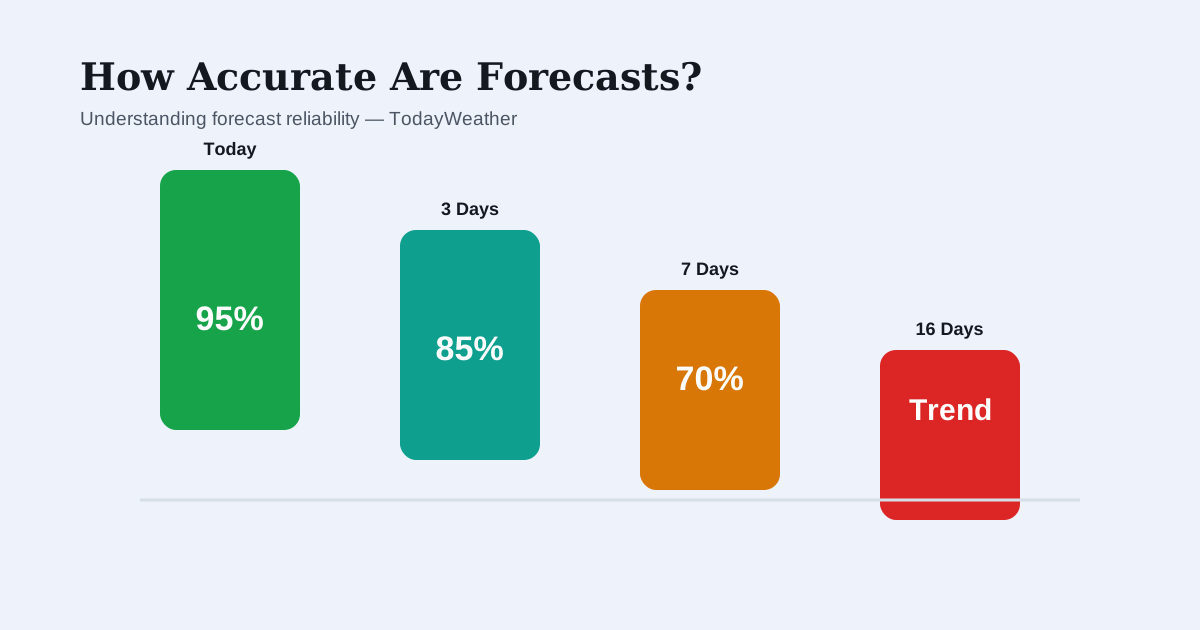
Regardless of whether you use an app or a website: check forecasts regularly, monitor hourly updates, review weather radar before traveling, pay attention to official weather alerts, and compare forecasts during severe weather events. Forecasts become more accurate as the event approaches.
Final Thoughts
Weather apps and weather websites both serve valuable purposes. Apps are excellent for convenience and real-time notifications, while websites offer deeper analysis, extended forecasts, interactive maps, and educational content.
Rather than choosing one over the other, many people benefit from using both depending on their needs. Staying informed through reliable weather information can help improve safety, travel planning, and everyday decision-making.