Every winter, millions of people in India search for one thing: where and when they can see snowfall. Some want to watch fresh snow fall for the first time, while others plan skiing trips or a family holiday in a white landscape. But snow in the Himalayas does not follow a fixed calendar. It comes with weather systems, and one hill station can get a heavy snowfall while another 100 km away stays dry.
This guide explains the best places to see snowfall in India, the months when each usually gets snow, what brings that snow, and how to use the forecast so that your trip actually lands on a snowy day.
What Brings Snowfall to India?
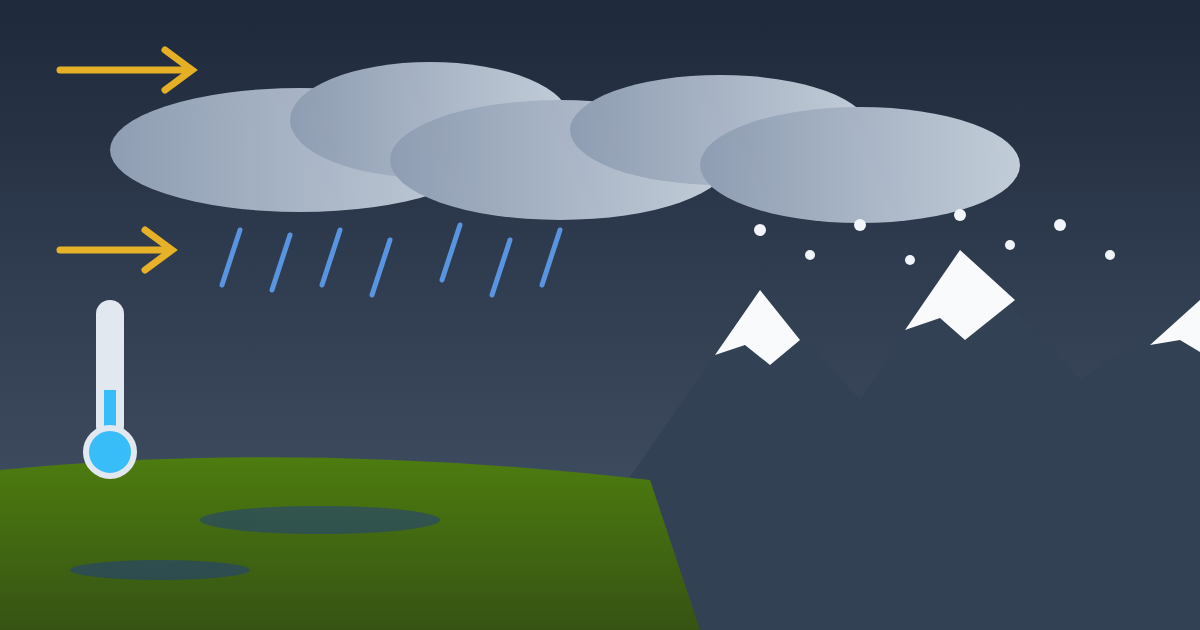
Most winter snowfall in north India is caused by western disturbances. These are low-pressure systems that move east and bring clouds, rain and snow to Jammu and Kashmir, Ladakh, Himachal Pradesh and Uttarakhand. Each disturbance usually brings one to three days of rain in the plains and snow in the hills, followed by clear skies and a sharp drop in temperature. You can read more in our explainer on what a western disturbance is.
Two things decide whether a place gets snow:
- Altitude: In mid-winter, snow usually reaches down to about 2,000–2,500 metres in the western Himalayas. Places higher than that get snow more often and keep it for longer. During strong disturbances, snow can reach lower hill towns too.
- Timing of disturbances: More frequent and stronger western disturbances mean more snow days. That is why some winters are very snowy and others are almost dry.
In the eastern Himalayas (Sikkim and Arunachal Pradesh), snow falls mainly at high altitudes, such as passes and valleys above about 3,000 metres.
Snowfall in India: Month-by-Month Guide
- November: Snow mostly on high passes and upper slopes, such as Rohtang, Sela Pass, Zero Point in North Sikkim and the upper reaches of Gulmarg and Sonamarg. Popular towns are usually cold and clear.
- December: Snow becomes more common in Gulmarg, Sonamarg, Pahalgam, Solang Valley, Sissu, Auli, Tawang and Lachung. Late December can bring the first snowfall of the season to Manali, Narkanda and sometimes Shimla.
- January: The coldest month and usually the best month to see fresh snowfall across most hill stations, including Manali, Shimla, Kufri, Dalhousie, Srinagar and Munsiyari. Kashmir is in Chillai Kalan, its harshest 40-day cold period (21 December to 29 January).
- February: Snowfall continues in most places, and the snow cover is often at its deepest. A good month for skiing in Gulmarg and Auli.
- March: Fresh snow becomes less frequent in lower towns, but high places such as Gulmarg, Sonamarg, Auli and North Sikkim can still have snow on the ground. Late-season snowfall is possible at higher altitudes.
Best Places to See Snowfall in Himachal Pradesh
1. Manali, Solang Valley and Sissu
Manali (about 2,050 m) is India's most searched snow destination. The town itself usually gets snow from late December to February, with January often the snowiest month. For an earlier and surer chance of snow, go higher: Solang Valley, the area around the Atal Tunnel and Sissu in Lahaul often have snow from December, sometimes from late November. After heavy snowfall, roads beyond Solang can be closed for days, so check the road status before going.
2. Shimla, Kufri and Narkanda
Shimla (about 2,200 m) gets snow in some winters but not every year, mostly between late December and February. Kufri, just above Shimla, and Narkanda (about 2,700 m) get snow more often and hold it for longer, and Narkanda has small ski slopes. If you are visiting Shimla for snow, staying flexible about dates helps a lot.
3. Dalhousie
Dalhousie (about 2,000 m) and nearby Khajjiar can get snow between late December and February. It is quieter than Manali and Shimla, which makes it a good choice for families.
Best Places to See Snowfall in Jammu and Kashmir
4. Gulmarg: India's most reliable snow destination
Gulmarg (about 2,650 m) is the most dependable place in India for heavy snow and skiing. Snow usually settles from December and stays till March, and the gondola takes visitors to the much higher slopes of Apharwat. If you want a near-guaranteed white landscape, Gulmarg in January or February is the safest bet.
5. Sonamarg and Pahalgam
Sonamarg (about 2,700 m) gets snow early in the season and very heavy snow in mid-winter, which can block the road beyond the town. Pahalgam (about 2,200 m) gets snow mainly from December to February and turns into a quiet white valley.
6. Srinagar
Srinagar (about 1,600 m) is lower, so snow is less frequent, but it usually gets a few snowfall days in late December and January. A snow-covered Dal Lake during Chillai Kalan is one of Kashmir's most famous winter scenes.
Best Places to See Snowfall in Uttarakhand
7. Auli
Auli (about 2,500–3,000 m) is Uttarakhand's top ski destination, with snow usually from late December to March and wide views of high Himalayan peaks. January and February are the best months for skiing.
8. Munsiyari
Munsiyari (about 2,200 m) in Kumaon gets regular snow between December and February and has some of the best mountain views in the state.
9. Mussoorie and Nainital
Mussoorie and Nainital (both about 2,000 m) are close to the plains and very popular, but snowfall here is occasional, usually in January, and not every year. Higher points nearby, such as Dhanaulti near Mussoorie, have a better chance.
Best Places to See Snowfall in the Northeast
10. Tawang and Sela Pass (Arunachal Pradesh)
Tawang (about 3,000 m) gets snow from December to February, and Sela Pass (above 4,000 m) on the way to Tawang is often snow-covered for much of the winter, with its frozen lake. Visitors need an Inner Line Permit to enter Arunachal Pradesh.
11. Lachung, Yumthang and Zero Point (North Sikkim)
Lachung (about 2,700 m) and the Yumthang Valley get snow from about December to February, and Zero Point (Yumesamdong, at more than 4,500 m) can have snow for most of the year. North Sikkim needs a permit, which tour operators usually arrange, and roads can close after heavy snow.
Quick Table: Where and When to See Snow
- Most reliable snow: Gulmarg, Sonamarg, Sela Pass, Zero Point (December–March)
- Best for skiing: Gulmarg, Auli, Solang Valley, Narkanda (January–February)
- Best for families: Manali, Dalhousie, Pahalgam, Auli (late December–February)
- Closest to Delhi: Shimla, Kufri, Narkanda, Mussoorie, Nainital (January, but less reliable)
- Earliest snow (November–December): high passes, Sissu, Sonamarg, Sela Pass, North Sikkim
How to Time Your Trip Using the Forecast
Since snow comes with western disturbances, the best way to catch a snowfall is to watch the forecast 5–7 days ahead instead of booking on a fixed date months in advance:
- Look for a western disturbance in IMD's bulletins and in our weather news. When IMD forecasts "rain/snow" or "heavy snowfall" over Jammu and Kashmir, Himachal Pradesh or Uttarakhand, snow is likely within the next few days.
- Check the hourly forecast for your destination. Snow is likely when precipitation is forecast and temperatures are close to or below 0–2°C.
- The day after a snowfall is often the best day to visit: skies clear, snow is fresh, and roads begin to reopen. It is also when it is coldest, so pack accordingly.
- Keep one or two buffer days in your plan in case roads close or a flight is delayed.
You can check the live and 7-day forecast for any of the places above on TodayWeather, and read about how snow forms in our guide on understanding snowfall.
Safety Tips for Snow Trips
- Dress in layers: thermal innerwear, a fleece or sweater, a waterproof jacket, gloves, a woollen cap and waterproof shoes with good grip. Wet clothes cool the body very quickly.
- Don't drive on icy roads at night. Black ice forms after sunset. Hire a local driver used to snow, and use vehicles with snow chains where required.
- Follow road and avalanche advisories from the district administration and police. Never go beyond a closed barrier for photos.
- Watch for altitude sickness at very high places like Sela Pass and Zero Point: headache, breathlessness and nausea are warning signs. Go up slowly, drink water and come down if you feel unwell.
- Protect your eyes and skin: sunlight reflected from snow is very strong, so wear sunglasses and sunscreen even on cold days.
- Carry medicines, a power bank and some cash, because ATMs and mobile networks can stop working after heavy snow.
- Learn how "feels like" temperatures work in our guide on wind chill and real feel. In windy, snowy weather it can feel much colder than the thermometer shows.
Final Word
Snow in India is never guaranteed on a particular date, but your chances are very good if you choose a high-altitude destination, travel between late December and February, and watch the forecast for western disturbances. Gulmarg, Sonamarg, Auli, Solang Valley, Tawang and North Sikkim give the most reliable snow, while Manali, Shimla, Mussoorie and Nainital reward travellers who stay flexible. Check the hourly forecast on TodayWeather before you set out, and enjoy the snow safely.