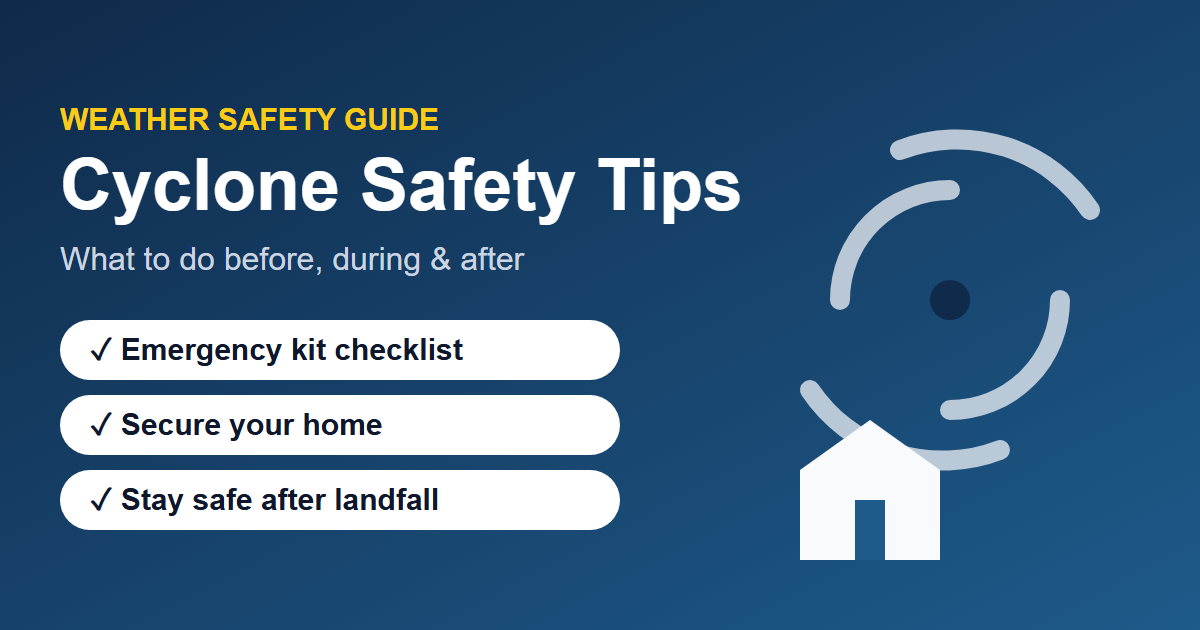
When a cyclone warning is issued, many people are not sure what they should actually do. Some panic and some ignore it. Cyclones are one of the few dangerous weather events that can be seen coming days in advance, so the hours before landfall are the most valuable time you have. This guide puts the most important cyclone safety tips in one place: what to do before, during and after a cyclone, what goes into an emergency kit, and which common mistakes put lives at risk.
If you want to understand how cyclones form and how they are categorised first, read our explainer on what a cyclone is. The rest of this article is about staying safe.
Understand the Warning: IMD's Cyclone Warning Stages
India's coastal cyclone warnings come from the India Meteorological Department (IMD) in four main stages. Knowing them tells you how much time you have left:
- Pre-Cyclone Watch (about 72 hours before): A cyclonic disturbance is likely to affect the coast. Start preparing.
- Cyclone Alert (about 48 hours before): Expected areas of impact are named. Finish buying supplies and securing your home.
- Cyclone Warning (about 24 hours before): The expected landfall point, wind speed, rainfall and storm surge are announced. Be ready to evacuate.
- Post-Landfall Outlook (about 12 hours before): Covers what happens inland after the cyclone crosses the coast. Interior districts also need to be careful.
IMD also uses colour codes. Red means "take action", not just "be alert". Our guide to IMD alert colours explains each level.
Before a Cyclone: Preparation Checklist
1. Build an emergency kit
Pack these in a waterproof bag that is easy to carry:
- Drinking water: at least 3–4 litres per person per day, for 3 days
- Dry food that does not need cooking: biscuits, chana, dry fruits, chiwda, packaged food
- Prescription medicines for at least a week, plus a basic first-aid kit and ORS packets
- Torch, spare batteries, a fully charged power bank and a battery or hand-crank radio
- Photocopies of Aadhaar, ration card, bank passbook and insurance papers, sealed in a plastic pouch
- Some cash, because ATMs and digital payments may not work if power and networks fail
- Candles, a matchbox or lighter, a whistle, rope and a knife
- Extra clothes, a raincoat, slippers and a blanket
- Baby food, sanitary supplies and items for elderly family members or pets
2. Secure your home
- Bring indoors or tie down anything the wind can lift: tin sheets, flower pots, plastic chairs, dish antennas, signboards and bicycles.
- Trim dead or weak branches of trees close to the house.
- Close and latch windows. Tape is not enough to stop glass from breaking, so board windows up or close shutters if you can.
- Move valuables, documents and electrical items to a higher shelf in case water gets in.
- If you live in a kutcha house, a hut or a house with a tin or asbestos roof, plan now to move to a pucca building or a cyclone shelter.
3. Plan for evacuation
- Find out where your nearest cyclone shelter is (often a school or community building) and the safest route to it.
- Agree on a meeting point and an emergency contact number for the whole family.
- If you live within a few kilometres of the coast or in a low-lying area, expect to be asked to evacuate because of storm surge risk. Leave early, in daylight, while roads are still open.
- Fill the vehicle's fuel tank and keep it parked facing the exit.
4. Farmers, fishermen and livestock owners
- Fishermen: Do not go out to sea once a warning is issued, and return to shore immediately if you are already out. Pull boats onto high ground and tie them securely.
- Farmers: Harvest mature crops early if you can and store the produce in a dry, covered place. Clear field drainage channels and support banana and papaya plants or young fruit trees with stakes.
- Livestock: Move animals to higher ground or a strong shed, store fodder safely and do not leave them tied in low-lying fields.
During a Cyclone: How to Stay Safe
- Stay indoors in the strongest part of the building: an inner room, corridor or bathroom with no windows.
- Keep away from windows, glass doors and tin roofs. Flying debris causes many injuries.
- If the building starts to break apart, shelter under a strong table or bed and protect your head with a pillow or blanket.
- Switch off the main electricity supply and gas cylinder if water starts coming into the house.
- Drink only the water you stored, or boil it first.
- Keep listening to official updates on the radio, TV or phone. Save your phone battery for important calls and messages.
- Do not go out when it suddenly goes calm. That is probably the eye of the cyclone, and the strongest winds will return within minutes from the other direction.
- Never try to cross flooded roads or flowing water, whether on foot or in a vehicle. As little as 30 cm of moving water can sweep a car away.
After a Cyclone: Staying Safe When the Wind Drops
Many cyclone deaths and injuries happen after the storm has passed. Stay careful:
- Wait for an official all-clear before going outside or returning home after evacuating.
- Keep away from fallen or hanging power lines, and report them to the electricity department. Wet ground and puddles can carry current.
- Do not enter damaged buildings. Walls and roofs may collapse without warning.
- Check for a gas leak by smell before lighting a stove, and air out the house first.
- Drink only boiled, chlorinated or packaged water, and throw away any food that came into contact with flood water.
- Watch out for snakes and insects, which often move into homes after flooding.
- Clean and disinfect your house, and do not let stagnant water collect, because diarrhoea, dengue and malaria cases often rise after floods.
- Take photographs of any damage to your house, crops, livestock or vehicles before cleaning up. They help with insurance and government relief claims.
Common Mistakes That Put People at Risk
- Waiting too long to evacuate. Roads flood and transport stops hours before landfall.
- Going out in the eye of the storm to check damage or move a vehicle.
- Trusting forwarded WhatsApp messages about the cyclone's path or name instead of IMD and the district administration.
- Going to the beach to watch the waves or take photos. Storm surge and huge waves can arrive without warning.
- Running a generator indoors, which can lead to deadly carbon monoxide poisoning.
- Thinking inland areas are safe. Cyclones can bring very heavy rain and floods hundreds of kilometres from the coast even after they weaken.
Cyclone Safety Tips for Children, the Elderly and People With Disabilities
- Explain to children what is happening in simple words, and keep a familiar toy or book in the emergency kit.
- Elderly people and people with disabilities should evacuate first. Arrange help and transport in advance.
- Keep an extra supply of medicines, hearing-aid batteries, glasses and mobility aids.
- Register with the local panchayat or ward office if anyone in the family needs special assistance during evacuation.
Quick Summary: Cyclone Safety Checklist
- Before: Follow IMD updates, pack an emergency kit, secure loose objects, store water, plan your evacuation and leave early if asked.
- During: Stay inside an inner room away from windows, switch off power if water enters, do not go out in the calm eye and do not cross flood water.
- After: Wait for the all-clear, avoid power lines and damaged buildings, drink safe water and photograph any damage.
Cyclones are powerful, but early warnings and simple preparation save lives every year. Keep an eye on the latest cyclone alerts and the hourly forecast for your city or village on TodayWeather, and share this checklist with family and friends who live in coastal areas.